



Every academic term begins with the exact same delusion. A group of bright-eyed, optimistic students sit around a pristine common-room table, armed to draft the ultimate treaty: The Roommate Agreement. Everyone nods politely, smiles, and signs their names to civilized, airtight clauses. Clauses which say, “We will clean the place every Sunday,” “We will take out the trash when it is 80% full,” “Everyone washes their utensils immediately after use.” It feels like the start of a beautifully cooperative, mature chapter of young adulthood.
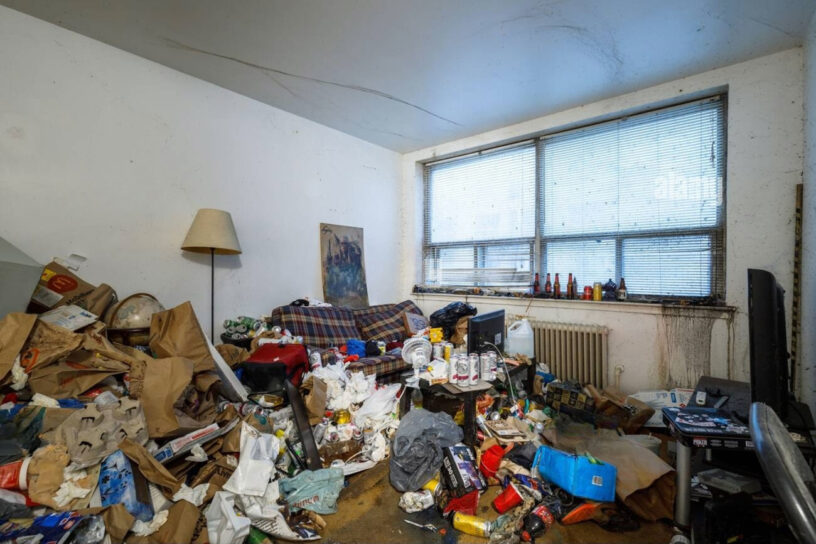
But the roommate social contract carries a terrifyingly short shelf life. Within weeks, the signed paper is buried under dust, the group chat has devolved into a cold war of passive-aggressive silence, and the common areas begin to fall apart at a scary pace. Suddenly, you find yourself visiting a friend’s unit in a luxury high-rise, a place marketed as premium student accommodation with a premium rent, only to discover it has devolved into a slum over the span of four months. There is random stuff strewn across the common areas, the trash can is overflowing along with all the improvised trash cans, and the kitchen has become a haven for anyone willing to do a PhD on life forms. And literally every surface is coated either in an unscrubbable layer of mystery goo, or a permanent white layer of limescale.
So that brings us to the elephant in the room. What causes human cooperation to break down so spectacularly the moment parents are no longer around to act as referees? Is it laziness? Is it work overload? Is it inactive roommates?
Here is where the unique architecture of Waterloo student life comes into play. In high-density student hubs like the towers on Phillip, Lester, or Columbia Street, developers have mastered the art of the multi-bedroom suite, squeezing random strangers with completely different definitions of “clean” into a single shared living space. Combine brutal academic workloads, engineering or math co-op stress, relative inexperience with housekeeping, and a complete lack of parental oversight, and you have a perfect recipe for domestic collapse.
It almost always starts with a slow, creeping negotiation with clutter. It begins innocently with a habit psychologists call “temporary placement.” You walk into your apartment after an exhausting day of lectures, drop a plastic grocery bag or an empty Amazon box on the floor near the doorway, and tell yourself “I’ll put that away later.”
But “later” behaves like the limit of a function. The variable keeps approaching the target, but never actually arrives at it. Once an object sits on the common area floor for more than twenty-four hours, it becomes a permanent piece of furniture. This creates a psychological green light for the rest of the unit. If there is already a random cardboard box in the hallway, dropping a stray shoe next to it feels harmless. If the shoe is there, leaving a bunch of empty grocery bags feels like nothing, then comes the empty pizza boxes, or even trash bags. Over a four-to-eight-month term, the floor begins to actively disappear. Walkways turn into narrow hiking trails. The floor stops being a floor and becomes a giant, communal dumping ground for everything people are too tired or too indifferent to put away. It is a physical manifestation of a collective mental shrug.
This environment breeds a specific psychological phenomenon known as House Blindness. When you live inside a developing biological research lab for long enough, your brain entirely stops registering the chaos as a problem. The mess simply becomes the new baseline.
This reality hit me like a physical wall when I went to a friend’s place in a local luxury building for a casual potluck, expecting a normal, functional kitchen where I could quickly warm up my food and fry some bread on the kitchen stove. Instead, I stood there holding my food, staring in horror at a room where nobody had cooked a real meal in months. Because they ordered food delivery every single day, the roommates had collectively decided the kitchen was a “dead zone” that no longer required basic sanitation. When confronted, the response is almost always a classic defensive downplay: “Oh, it’s not that bad, we just don’t really use the stove.”
But the state of the kitchen tells a completely different story. The sink tap is broken, the sink drain is clogged with old food remains buried under hard water buildup, and the cookware itself has physically changed from months of neglect. You’ll find one pan covered in a sticky varnish of polymerized oil that has literally fused to the metal after being heated and not washed. Right next to it sits the “egg pan,” coated in a permanent layer of limescale. The fact that someone can casually fry an egg on top of that mineral buildup without blinking proves the power of house blindness. To an outsider, it’s a clear health hazard, but to the resident, it’s just a used pan.
So why do smart, high-achieving students let their multi-million-dollar high-rises get so bad? It boils down to a toxic combination of optimistic laziness and a sociological concept known as the Tragedy of the Commons.
When a student lives alone, they know with absolute certainty that if a piece of garbage is on the carpet, it will stay there until they pick it up. The accountability is 100% theirs. But the moment you add roommates, the mental math completely changes. Everyone starts operating under the comforting illusion that they are the clean one, while simultaneously assuming that someone else will eventually break first and clean up the common area. A roommate will walk past an overflowing trash bin twenty times a day, actively telling themselves, “I didn’t put those specific boxes there, so it’s not my job to move them. Someone else will get annoyed enough to throw it out.” Or they think, “The person before me didn’t clean up before leaving, so I also don’t need to clean up.”
The tragic irony of student housing is that everyone is waiting for a person who does not exist. Because every single roommate is practicing the exact same avoidance strategy, the baseline of what is considered an acceptable living space plummets to zero. Eventually, someone decides to break the cycle and do all the cleaning (in some miraculous cases, the other roommates join in due to guilt), or a cleaning company has to be called in to take the honors, after which the room gets destroyed within days. However, in most cases, rooms get messed up to the point that trying to clean them makes the situation worse, and any cleanup takes up a large chunk of your day.
Ultimately, student housing is a crash course in human nature. It proves that no matter how glossy the lobby is, or how premium the rent price may be, a luxury apartment cannot fix a broken social contract. If you don’t want your home to become a PhD research lab, someone eventually has to pick up a sponge, and break the standoff.
Feature Image: https://c7.alamy.com/comp/2JRYDM5/a-filthy-apartment-living-room-with-lots-of-clutter-inside-a-hoarders-apartment-this-building-has-since-been-demolished-2JRYDM5.jpg
Leave a Reply