
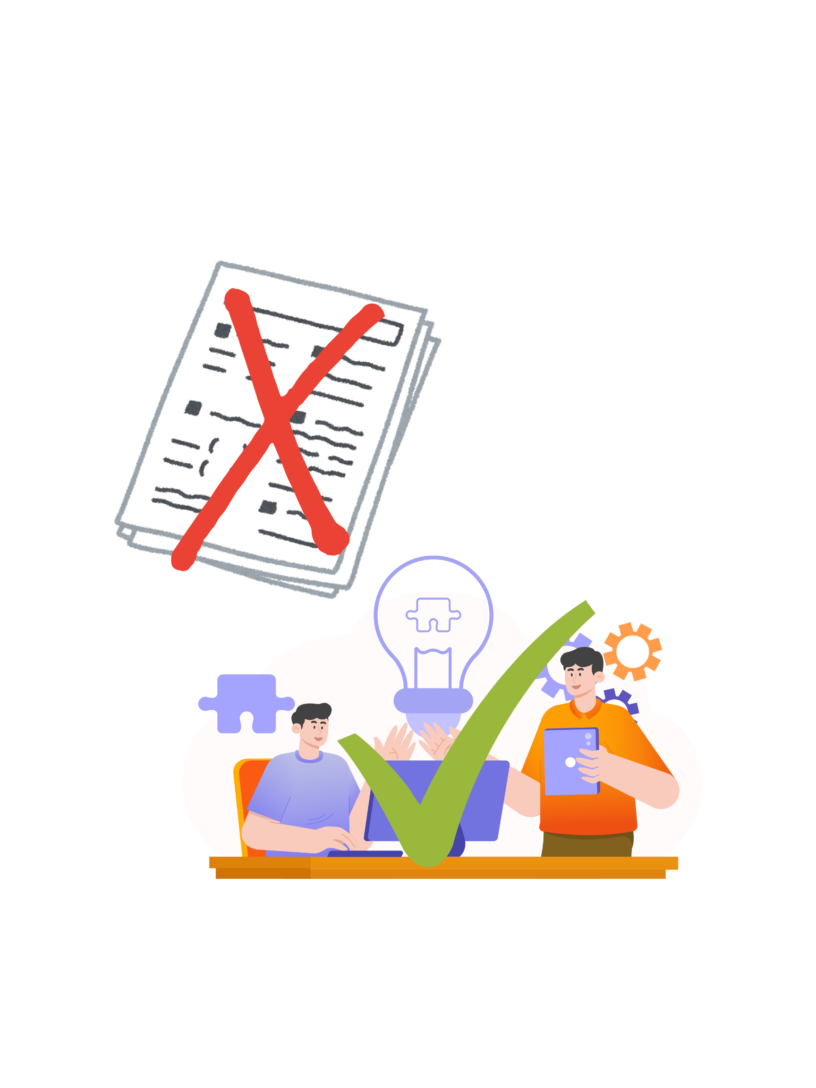



Have you ever thought about how exams just suck? Cramming in studying up until the last second just to realize you haven’t learned anything from class- and now, you’re retaking Calculus II. The way our exams evolve into final projects are a great thing to retain the information and pass that class.
As a first year Mechatronics student, I will be doing a final project in Mechatronics Engineering 100 (MTE 100) and Digital Computation (MTE 121). The final project will combine the learning we’re doing in both. You may ask; “How does this show the students’ learning?” The answer lies in the way projects bring together knowledge, skills, and creativity.
Coming from a STEAM high school, I often had final projects over final exams. This allowed us to integrate the learning we did in the classroom into real life problems. This fostered critical thinking and problem solving, creativity and innovation, collaboration, and inclusive learning for all. We all learn differently, and projects showcase it.
Exams often test short term memory under pressure, while projects require students to apply the knowledge from class and build solutions. Project work leads to long term understanding, which means it will be easier to build on rather than learning for an exam, then forgetting. Exams in a bright room, people coughing or sneezing, the scratching of their pencils; it isn’t the most optimized space for test taking.
It’s shown that students would prefer projects over exams. It may take longer but they feel like they’re actually engaging in the topic. Dr. Kelleher stated that, “positive emotions play a crucial role in performing well in finals.” If you are under pressure and feel stressed, you will not perform as well as you did while you studied because you feel a negative emotion. On the other hand, when you have a final project, you can do something you’re actually passionate about in the class.
Engineers aren’t judged in their careers by how well they recall formulas in silence; they solve open-ended problems with resources and collaboration. Projects encourage thinking outside the box; there isn’t just one right answer, which better reflects their future career. There are endless solutions for the same outcome. Projects can also reduce stress and increase engagement with the subject you’re learning.
The typical exam is designed to be completed with significant time to spare for the students who learn the material a certain way. Projects are a way to have all minds be able to complete it. Projects are a way to plan and team up on learning. Engineers never work alone; learning to navigate different team dynamics is part of professional growth. With group projects, peer evaluations and structured grading can reduce freeloading from partners. Working in a group also means you can share the load. Everyone has other commitments, but if you share the load, you can get it done more efficiently.
Overall, final projects are less stressful and are a better option even if they’re a bit more work. Final projects don’t just measure what students know in the moment; they reveal how they think, collaborate, and create rather than having students memorize their way through an exam. They prepare us for real-world challenges in a way exams simply cannot.
References:
Makersmuse. (2024, December 9). Top benefits of implementing STEM Labs in schools. Makers’ Muse. https://makersmuse.in/blog/what-are-the-key-benefits-of-implementing-stem-labs-in-schools/
Final exams VS. projects. The Mane News. (2024, June 2). https://manenews.com/2024/06/04/final-exams-vs-projects/
Leave a Reply