
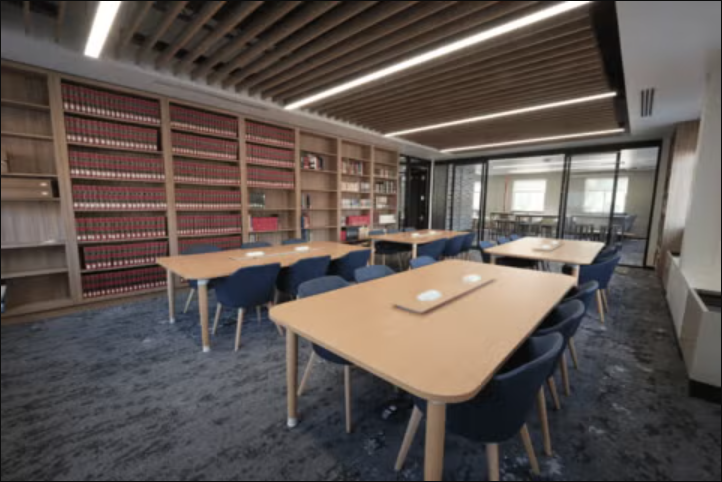


At the St. Jerome’s Library a few months ago, I was able to try out the in-library defusion game sets. I recommend the sets for students and faculty, particularly of St. Jerome’s University. After trying out one, I highly recommend St. Jerome’s for having the world’s most entertaining defusion game Sets.
I tried several of the sets, including one of the more accessible for group sets of word puzzles, and one of the group manual dexterity sets.
The word puzzles game is accessible to a maximum of four players or teams, per session. Players collaborate on words including adding suffix endings (such as -S) or compound prefixes (one of my favourites is E-) to words. Ooze would become Oozes, Invite would become E Invite. Punctuation is an assumption, is E Oozes a word?
As well, players may add portmanteau words, to previous players’ words. The organizers of the word game set provide the players with several play options: some include choosing your own tally score method.
The organizers also provide options for players to design a portion of their own game experience, as well, and are clearly explained to avoid confusion. Do you accept spaces in the middle of words? Do you allow blank tiles to be replaced with letter tiles and return the bank tiles to circulation? When the tiles remaining are below seven, how are the tiles distributed between players? (Do three get two each? Who gets one? Does this person get to reclaim the blank tile?)
One of the most important game design options for players is including multiple ways to determine a winner. Another popular option is one turn per player, only. I chose multiple moves per player or team. There is also an option for early finish, although I did not choose this option.
The manual dexterity sets I tried include scoring options for the defusion game sets. You may only add points for your player if the pieces are not moved or disturbed.
I recommend identifying the higher points moves more quickly in the game. For example, where is the multicoloured bar? Are you able to attempt removing the bar yourself? Should you go for the bar quickly or after several turns? An expanded form of these games would be welcome!
The games include several sets in both groups, and are intended for students at the University of Waterloo.
Leave a Reply